

What It Means To Celebrate The Eucharist
Monday, October 12, 2026
Why Do We Celebrate the Eucharist Every Week?
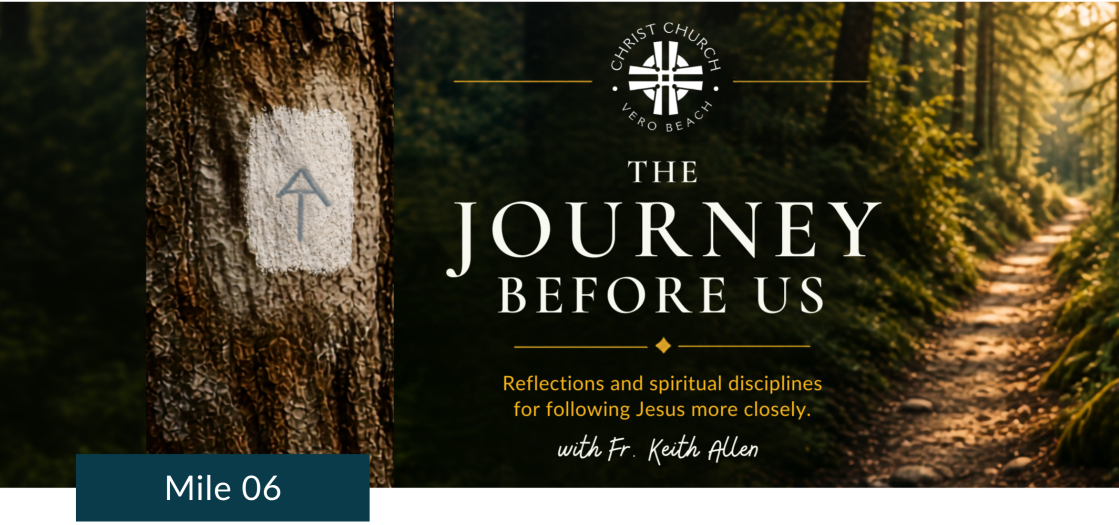
When walking a trail, there are trail markers that reassure you that you are still on the path, making progress toward the destination. On the Appalachian Trail, these are white blazes painted on trees along the way. As we journey with Christ, one of our trail markers is that of the Eucharist.
The center of worship within the Anglican tradition is the Eucharist. The word Eucharist means “great thanksgiving.” There are three realities that move us toward thanksgiving that all intersect in the celebration of the Eucharist:
1. Christ is present to us here and now.
2. Sin is forgiven through the atoning sacrifice of Christ.
3. Christ is Lord and Savior.
The liturgy walks us through the whole story of the gospel each week and culminates as we kneel to receive the Sacrament – bread and wine—the Body and Blood of Christ.
First, Christ is really present to us in the meal of the Eucharist. We believe that through the mystery of the bread and wine we are receiving the body and blood of Jesus. We believe He is in the meal and that He is in us right now. This is tangible evidence of Christ’s promise, “I am with you always, to the end of the age" (Matthew 28:20, ESV). We are not merely remembering something that happened long ago, but we are participating here and now in the sacrifice of Christ. He died once for all so that we can each and every week come back to the table and be renewed and reminded that He is with us and we are safe in Him.
Second, the Bible is very clear that without the shedding of blood there is no forgiveness of sins. (Hebrews 9:22). We have all sinned, and therefore we all need a Savior. Jesus, the sinless one, died for us as the atoning sacrifice for our sin. (Romans 5:8-10) Through the liturgy of the Eucharist, we call to mind and confess our sins through the public confession of sin, which is followed by the absolution. The priest, on behalf of Christ, announces to all who confess and repent: "You are forgiven." Then as we come to the table, we are freshly aware that this forgiveness was not free but rather came at the high cost of the body and blood of Jesus. So we take bread – the body of Christ given for you, and we receive wine – the blood of Christ shed for you. We are once again present to the love of the Father and the Son in the gift of bread and wine.
Third, we are sent from the table to serve as witnesses of Christ our Lord. The word witness in Greek is the root word from which we get the word martyr. A witness is one who gives his life, even to the point of death, to follow Christ. This is what it means that Christ is Lord. We surrender all that we are and all that we have to Christ – we take up our Cross. However, we are also sent forth in the reality that Christ is the Savior of the world. Jesus’ atoning sacrifice and His divine love are sufficient to reach every tribe, tongue, and nation. Therefore, we leave the table and go into the world with the assurance that we go in Christ and in His power. He has paid the price for forgiveness. He is sending us out to share the good news with the lost. He will gather to Himself a people.So we go to tell others that they are invited to the feast. They too can come as sinners and find grace sufficient for their need. They can come and receive from Christ a new life and new future. They can come with us to the table and give thanks to the Lord.
We have so much to be thankful for in Christ – so I will see you at the Great Thanksgiving, the Eucharist, this coming Sunday.
Father Keith
What’s on your mind as we walk together?
Have a question about faith, Scripture, Anglicanism, or following Jesus?
ASK THE RECTOR →